Hidden stories #12
19 January 2026
Queer histories: remembering, healing, speculating
Queer histories are often fragmented, silenced, or erased. In this article, conservator and curator Adelheid Smit explores how textiles can function as carriers of memory, healing, and imagination within LGBTQIA+ history. Drawing on the exhibition Haus of fibre at the Textile Museum, she shows how artists, through co-creation, personal narratives, and speculative history, make lost queer stories visible once more — not as something new, but as something that has always existed.
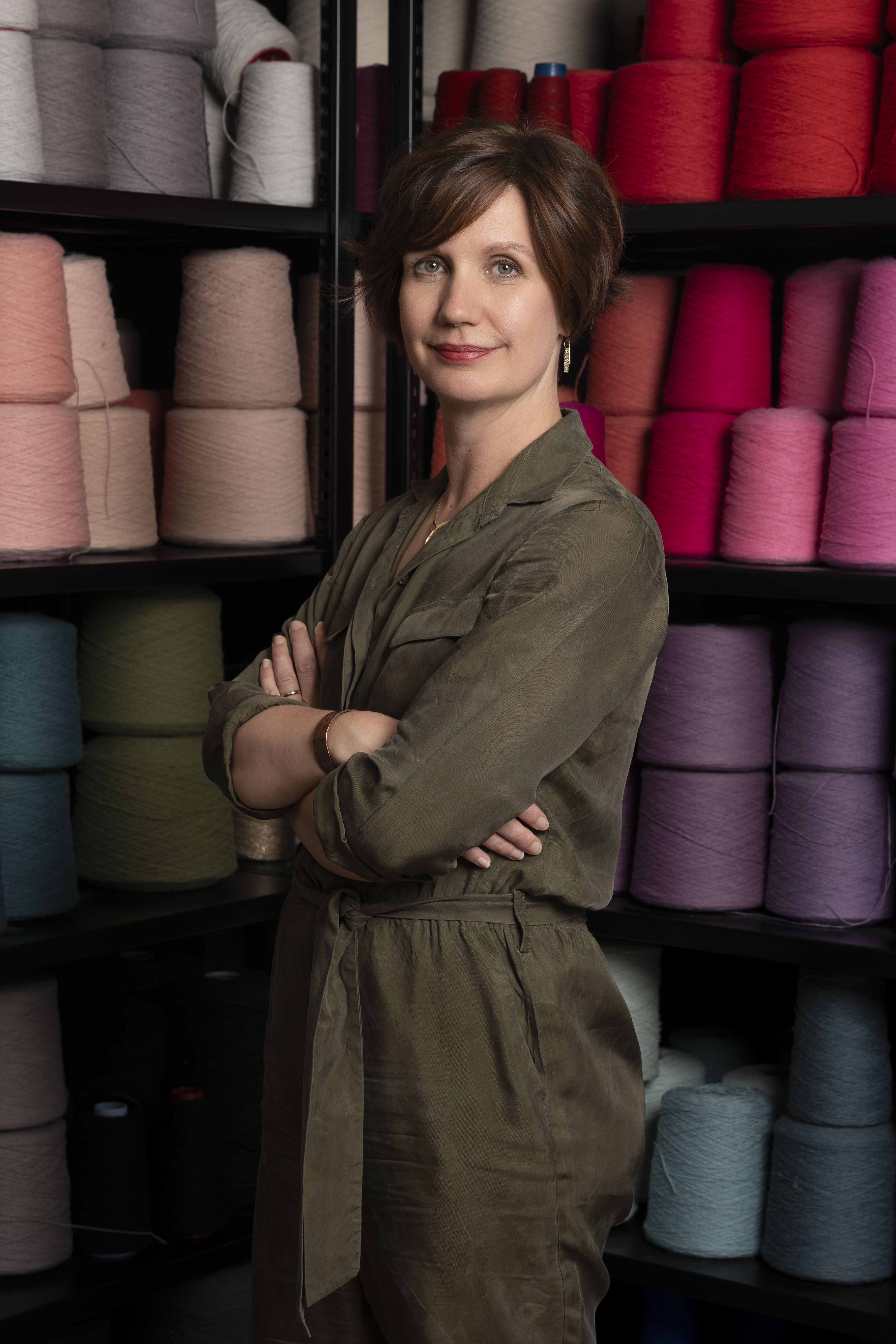 Photo by Patty van den Elshout for TextielMuseum.
Haus of fibre
From autumn 2025 onwards, the Textile Museum will present an exhibition about the relationship between LGBTQIA+ artists and textiles. This exhibition, Haus of fibre, was developed through a co-creation process with four queer artists: Chathuri Nissansala (she/they), Nixie Van Laere (she/they), Yamuna Forzani (she/her), and Célio Braga (he/him). Through a series of meetings, we collectively shaped a narrative, artworks, and other objects that complemented it, as well as ways of sharing our story with the public.
An important aim of the exhibition was to present this connection between queer artists and textiles not as something new, but from a historical perspective. Throughout history, there have always been LGBTQIA+ designers and artists who not only influenced and inspired one another through their creative textile practices, but whose work also had a major impact on mainstream culture. Unfortunately, many traces of their lives and work have been erased — by themselves or by others — never documented and therefore forgotten, as they were unable to be open about who they were.
In creating an exhibition about the role of textiles in the work of LGBTQIA+ artists, we were therefore faced with a challenge: how do you show that queer artists have always existed, and that textiles have always mattered to them, when so little has been preserved? And how do we convey just how large those gaps really are?
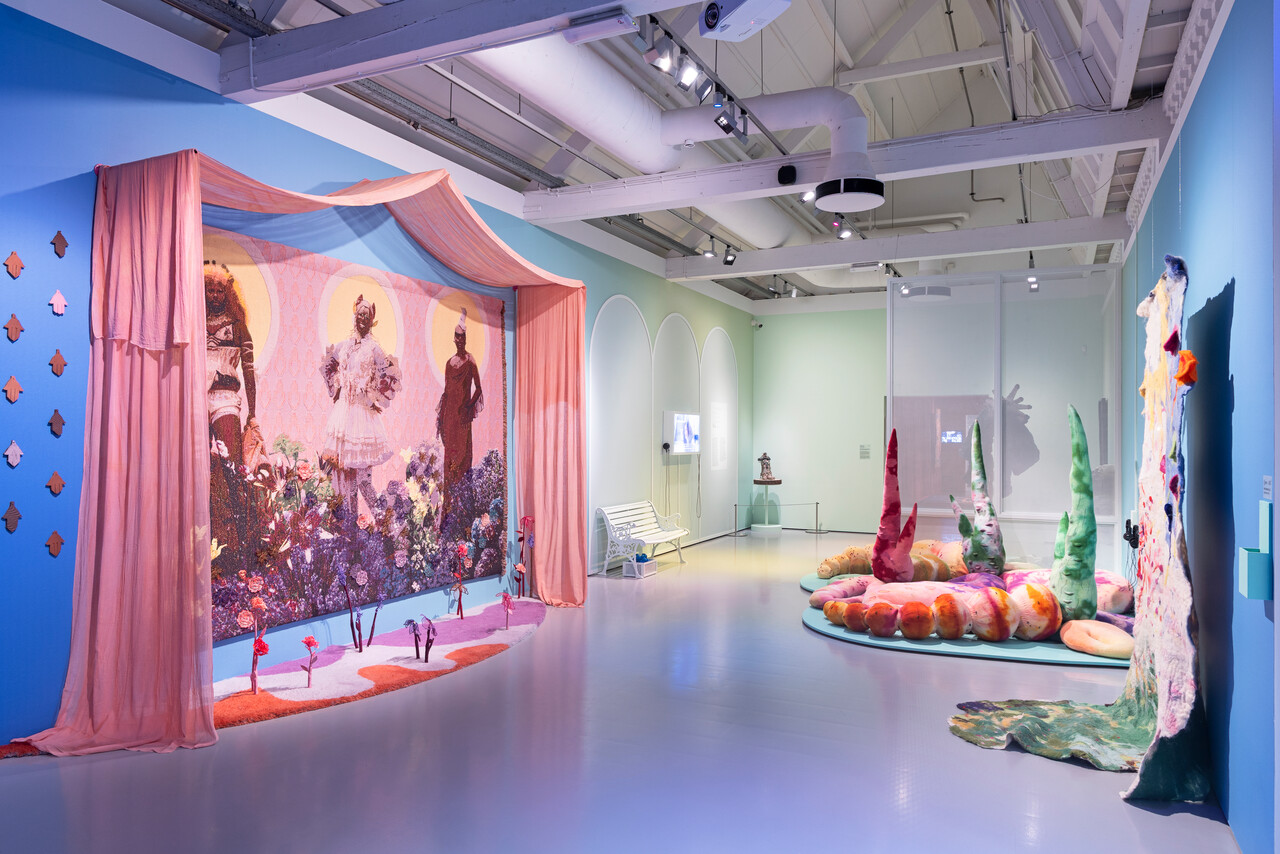
Photo by Josefina Eikenaar for TextielMuseum
Rooms full of stories
The exhibition Haus of fibre is designed as a queer house with rooms and a garden. The house connects the handmade nature of textiles with the self-made existence of queer people. It is also a creative house that is constantly changing and resists rules and boundaries. The concept of a house further helps to move away from chronology and to connect stories across time. Besides the fact that the aforementioned gaps in queer history make a chronological approach impossible, this layout also gave us the space to evoke the history of LGBTQIA+ people in more creative ways.
Finally, it is worth reflecting on the fact that contemporary queer exhibitions in museums and other art institutions stand on the shoulders of grassroots exhibitions by queer artists and curators, which often took place in domestic settings.* An intentionally associative walk through the different rooms of Haus of fibre shows how we reclaim queer stories within history in various ways, or otherwise create historical connections.
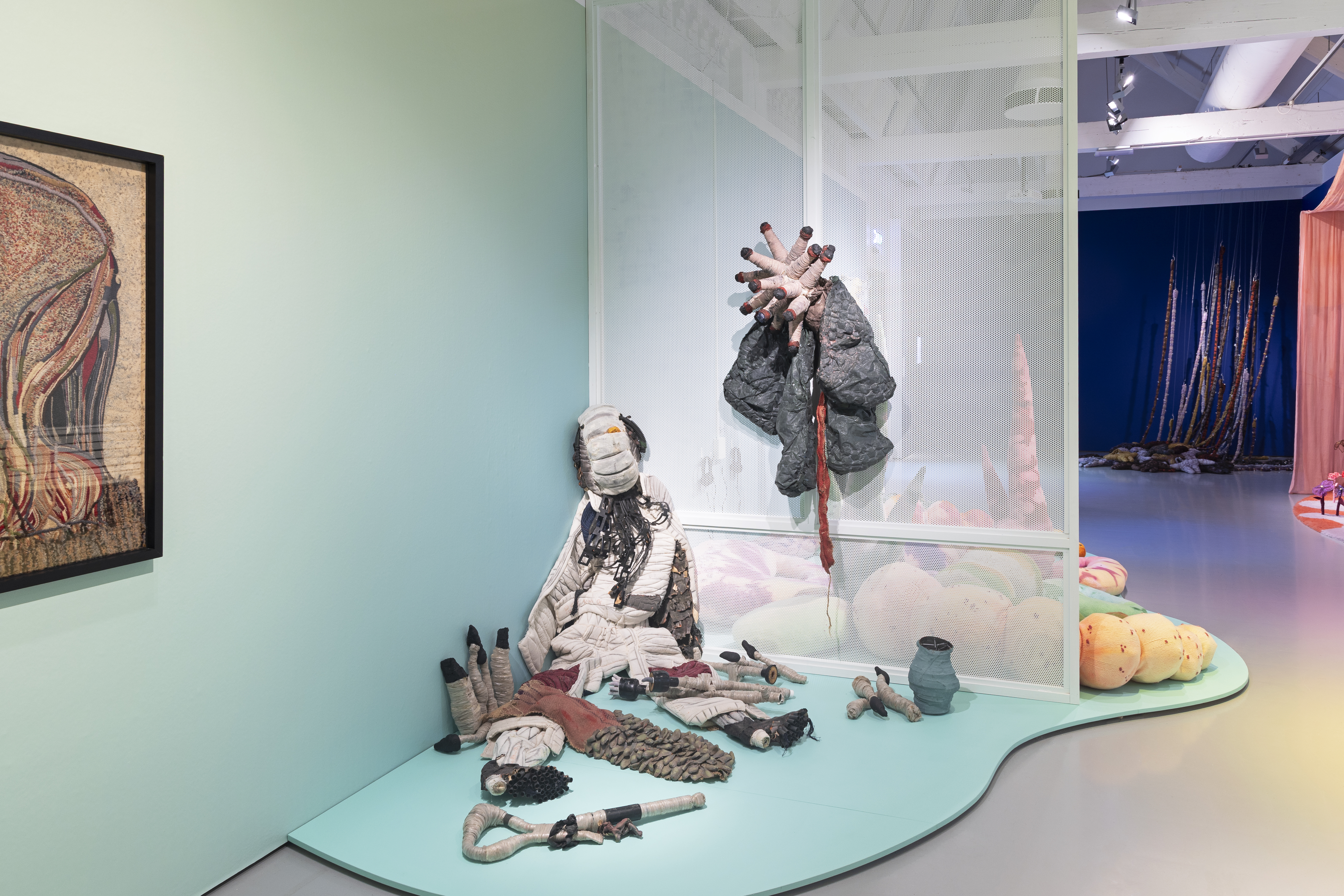
Photo by Josefina Eikenaar for TextielMuseum
Rewriting (art) history
LGBTQIA+ history is not written only in broad strokes, but precisely through the many personal stories that make it up. In the entrance hall of Haus of fibre, visitors are immediately welcomed by a monumental quilt by Studio Paul & Haiko, entitled I Was Born from an Ocean of My Mother’s Skirts. Paul van de Waterlaat (he/him) and Haiko Sleumer (he/him) — together with many helping hands, as a quilt is never made alone — have depicted Paul as the goddess Venus from Botticelli’s famous painting.
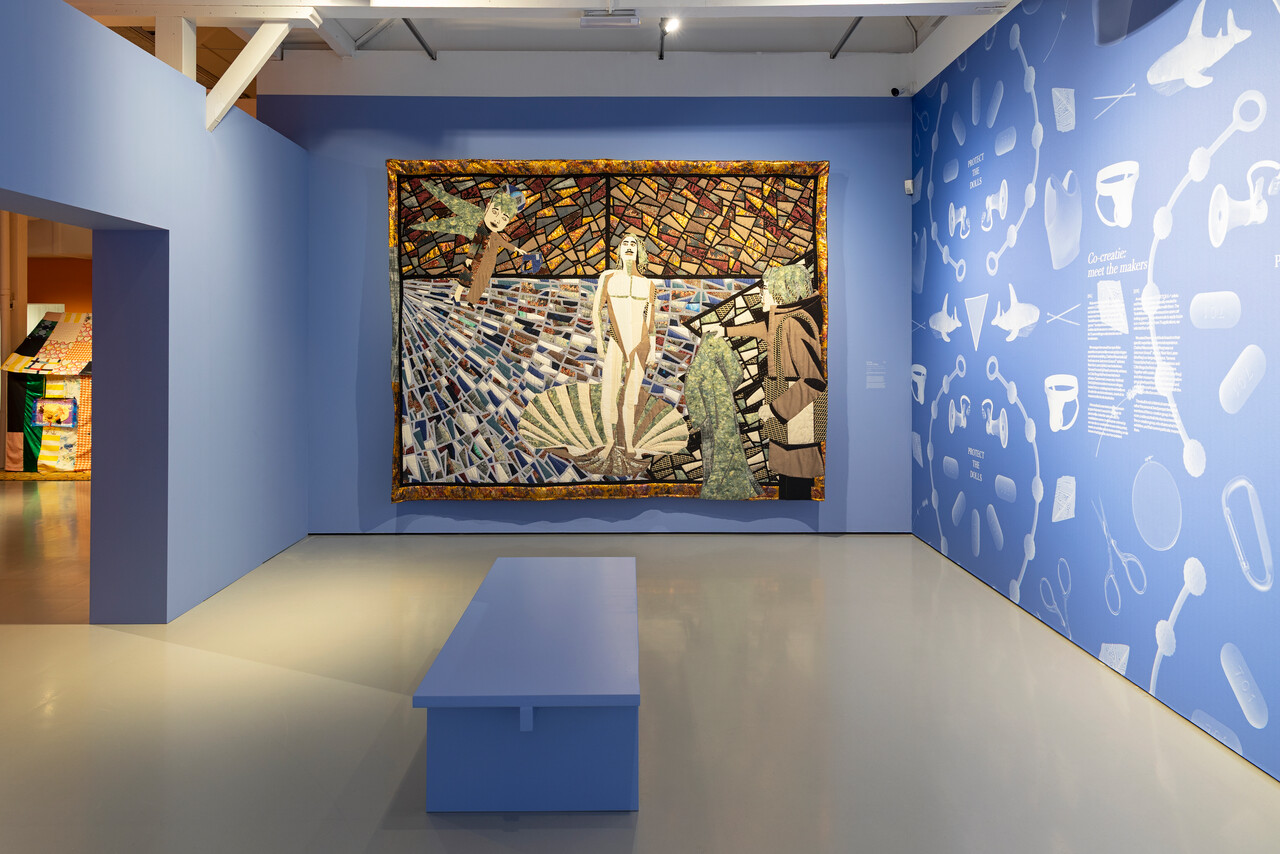
Studio Paul & Haiko. Photo by Josefina Eikenaar for TextielMuseum
Remembering how queer we were
In the kitchen, various artworks show how LGBTQIA+ identities intersect with other forms of identity such as religion, ethnicity, and culture. Although these intersections can also be complex and oppressive, several artists demonstrate that queerness and spirituality, for instance, can be inherently connected.
In their work, Chathuri Nissansala (she/they) makes visible how gender non-conforming people in pre-colonial Sri Lanka were always part of traditions, stories, and spiritual communities. Due to laws introduced by Dutch and later British colonial rulers, LGBTQIA+ people in Sri Lanka are still persecuted today. Before that time, however, there existed an indigenous community of gender non-conforming people known as the Nachchi. That they were not considered female or male was in fact part of their status; their non-binary nature was believed to place them closer to the spiritual world.
In her powerful performances and videos, Chathuri presents contemporary Nachchi in places that were damaged during the Sri Lankan civil war (1983–2009) and now serve as meeting spaces for LGBTQIA+ people. A central figure in these performances is the Black Prince, or Kalu Kumaraya, a divine entity described in Sri Lankan oral traditions as a gender-fluid figure who is constantly changing. The queer performers who bring these ancient rituals back to life wear handmade costumes and ornaments. Chathuri trained with an old caste, the Navandanna, who have for generations created fine handwoven beadwork. This beadwork formed an important part of various religious traditions and healing ceremonies known as Shantikarma. The different beadwork patterns function as symbols of cosmic healing and transgression.
As the Navandanna caste is slowly disappearing, Chathuri has taken it upon herself not only to preserve this form of spiritual craftsmanship, but also to reconnect it with Sri Lanka’s indigenous queer history. She creates beautiful jewellery, crowns, and masks that not only contribute to the transformation into divine, queer beings, but also partially obscure the wearer’s identity. Given the current persecution of LGBTQIA+ people under the aforementioned colonial laws, this is unfortunately necessary. All the more important is Chathuri’s work in linking the healing power of indigenous craft with Sri Lanka’s contemporary LGBTQIA+ community, thereby demonstrating that queerness has always been part of Sri Lankan culture and history.
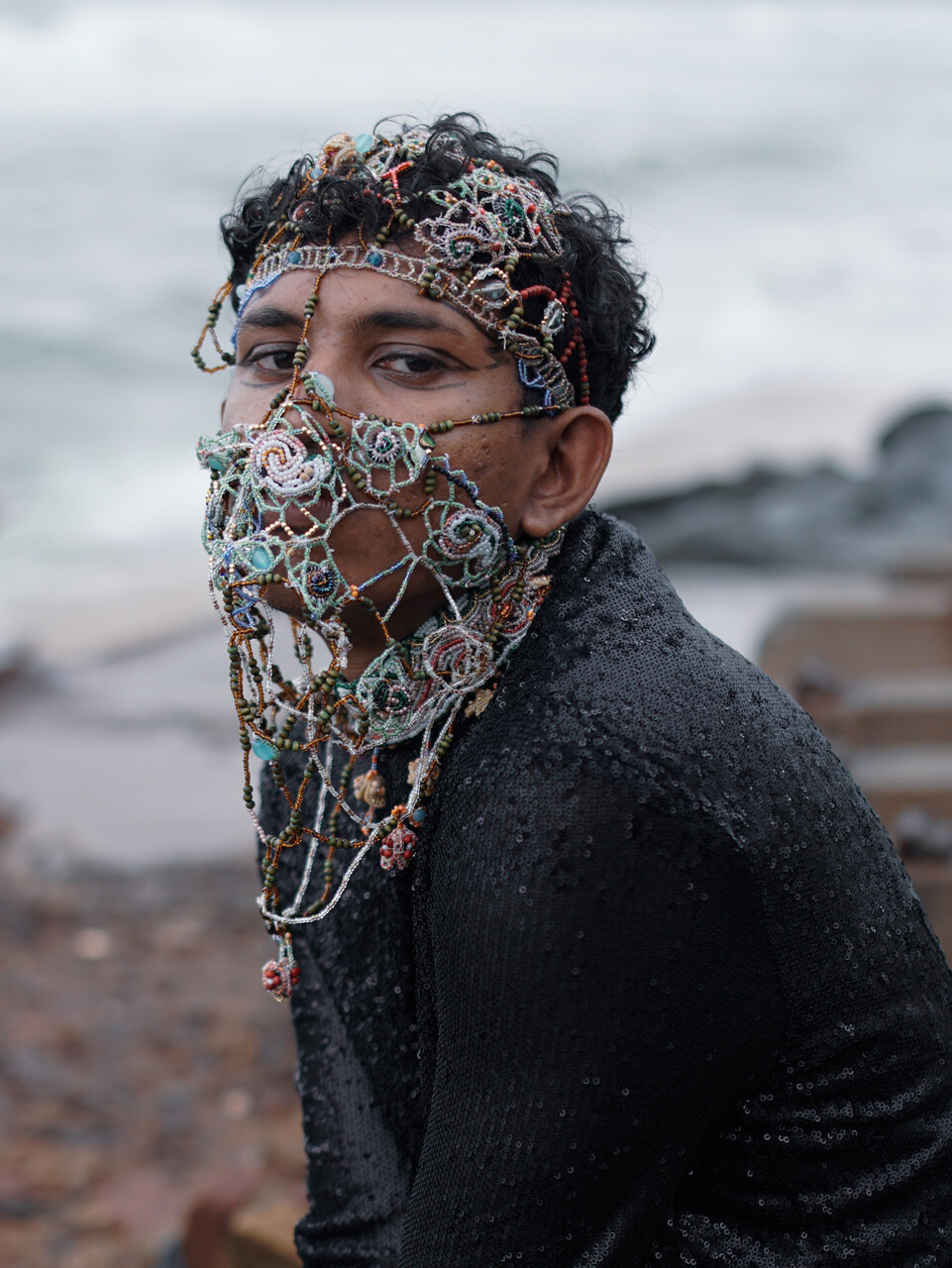
Chathuri Nissansala. Photo by Uditha Chirantha (part of KAGUL collective)
Say their names
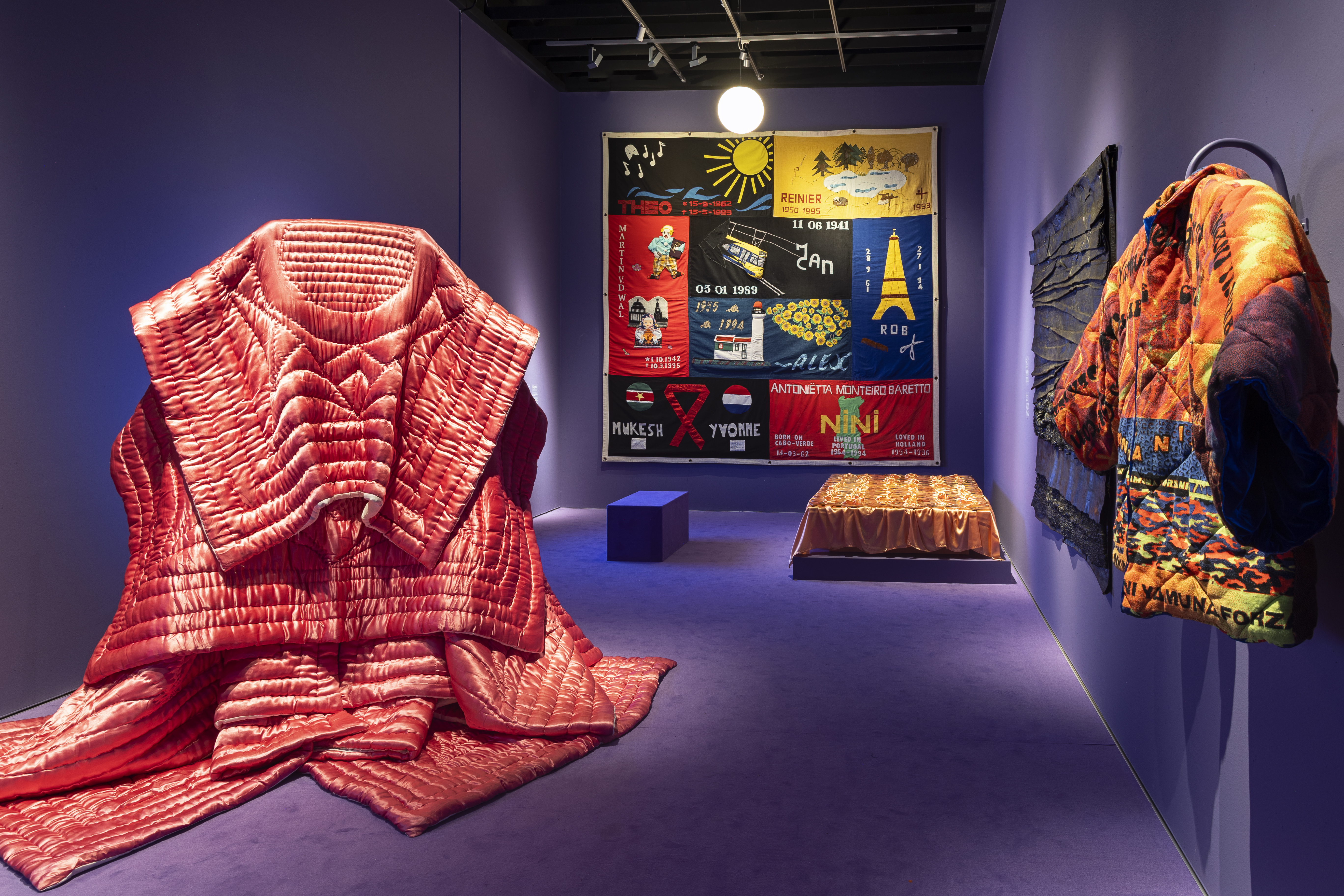
In the exhibition, each space features a video portrait of one of the members of the co-creation group, made by the film collective De Transketeers. In each video, you meet one of the co-creators, learn more about their work, and hear what “their” room means to them. Our historical advisor Célio Braga (he/him) not only honours the suffering and the resistance of queer people in his artworks*, but also felt it was important to reflect this in his video portrait.
In the video, Célio explains how the living room symbolises friendship and coming together with one’s community. These friendships do not exist only in the present, but also reach back into the past. The video portrait ends with Célio reading aloud a long list of names of queer writers, artists, photographers, and thinkers — some deceased, others still living — who have inspired him, so that they will not be forgotten. He concludes by acknowledging the many anonymous LGBTQIA+ people we have already lost and who have likewise been written out of history.
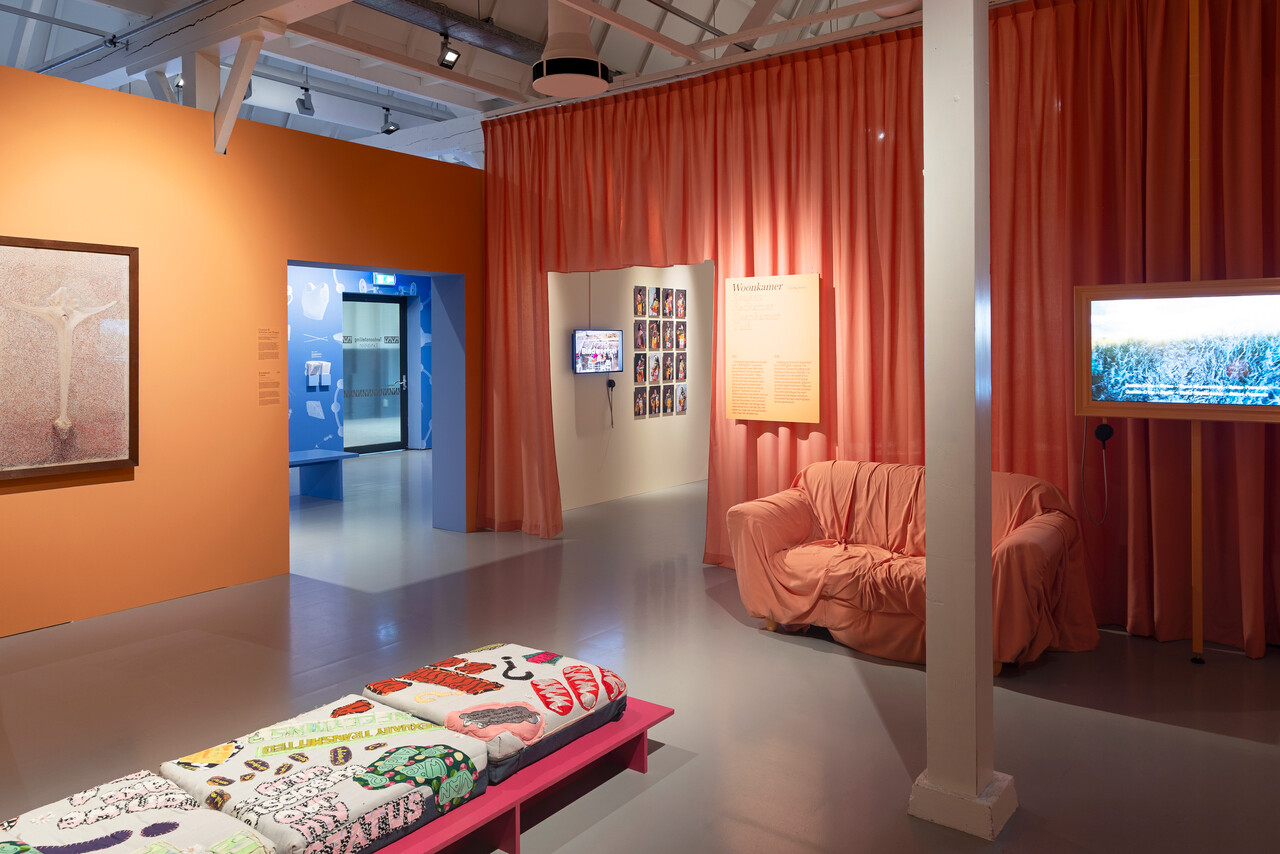 Photo by Josefina Eikenaar for TextielMuseum
To be continued...
Remembering and commemorating form an important starting point, but queer history cannot be fully captured by what has been preserved. In an upcoming blog, we will explore how artists and curators engage with gaps in the archive, how speculation creates space for hidden lives, and how imagination is inseparably linked to queer ways of thinking about the future. Continue reading here: Hidden Stories #13.
Plan your visit
Buy a ticketWritten by Adelheid Smit, curator collections at the TextielMuseum.
Would you like to see more of our museum collection or the (upcoming) exhibitions?
Share with friends