.jpg)
Hidden stories #11
3 December 2025
A peak into the collection
How does textile come into being? At the TextielMuseum, the answer lies not only in the finished object, but especially in everything that precedes it. From sketch to sample, from punch card to prototype: our collection is full of traces of making processes that reveal how rich and layered textile design can be. In this blog, curator Danique Klijs takes you through historical archives, contemporary experiments and inspiring examples of makers who build on this heritage. A look behind the scenes — or rather, a look into the collection — where past and future continuously nourish one another.
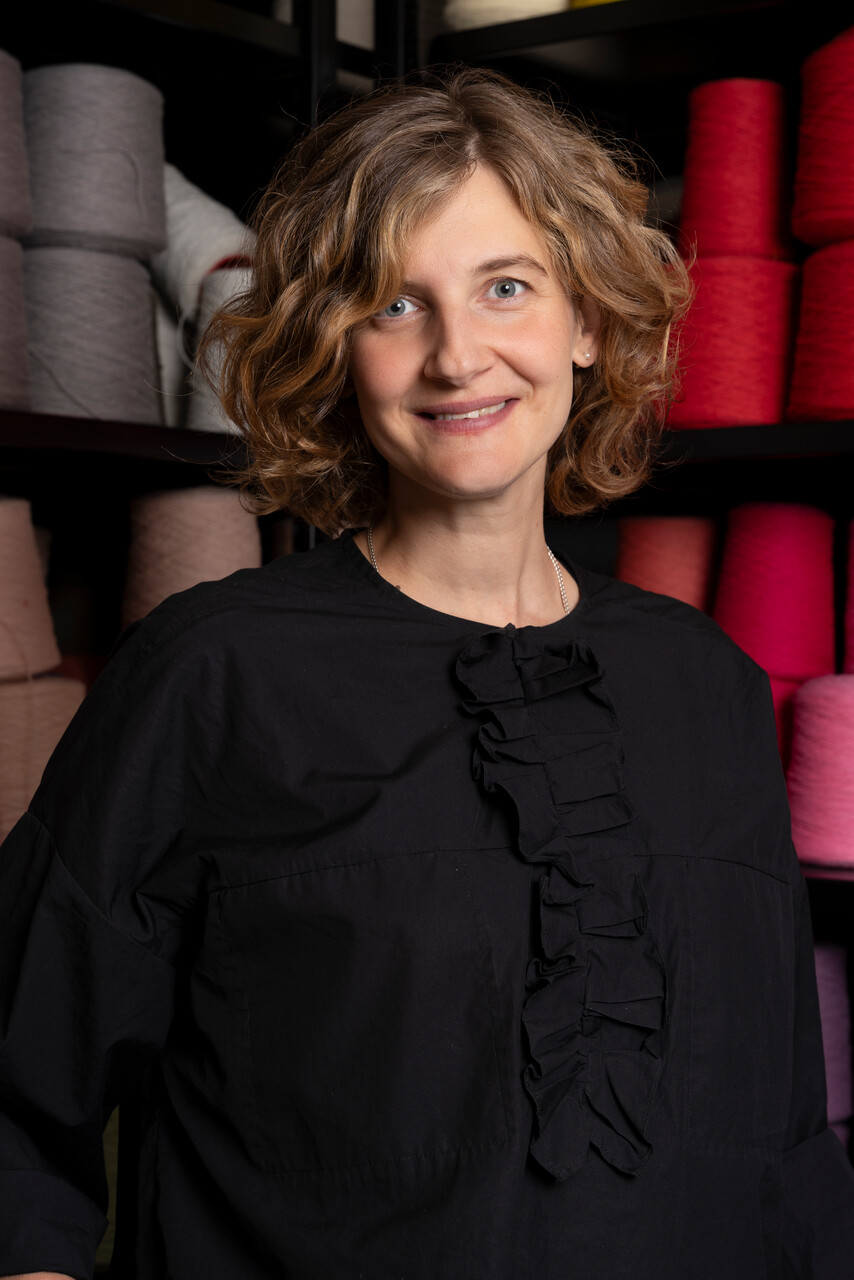
Photo by Patty van den Elshout for TextielMuseum.
Museum in Operation
The TextielMuseum is a museum in operation — something you notice as soon as you step inside, when the sound of machines greets you. Where Tilburg was once known for the production of woollen fabrics, around 200 works now roll off the machines in the TextielLab each year, ranging from autonomous artworks to specially designed interior textiles. At the TextielMuseum, past and present come together: heritage is preserved and displayed, while new heritage is created at the same time.
As a museum in operation, we are not only interested in final outcomes, but at least as fascinated by making processes. For this reason, we allow the public to witness the creation of new work in the TextielLab, and we also collect making processes themselves — such as design sketches, technical drawings, colour charts and samples. We collect processes from contemporary works, whether or not produced in the TextielLab, as well as from historical artists’, designers’ and company archives.
A fine example is the archive of the hand damask weaving mill W.J. van Hoogerwou & Sons. When the mill closed in 1971, the damask looms, punch cards, pattern drawings, sketches, samples and several finished damasks were added to the TextielMuseum’s collection. This allows us, for some designs, to present an almost complete overview — from initial sketch, to pattern drawing, to punch card, to finished textile.
Such making processes are not only valuable for research; they also serve as inspiration for new work. Contemporary makers at the TextielMuseum are keen to continue weaving ideas from the past into the present.
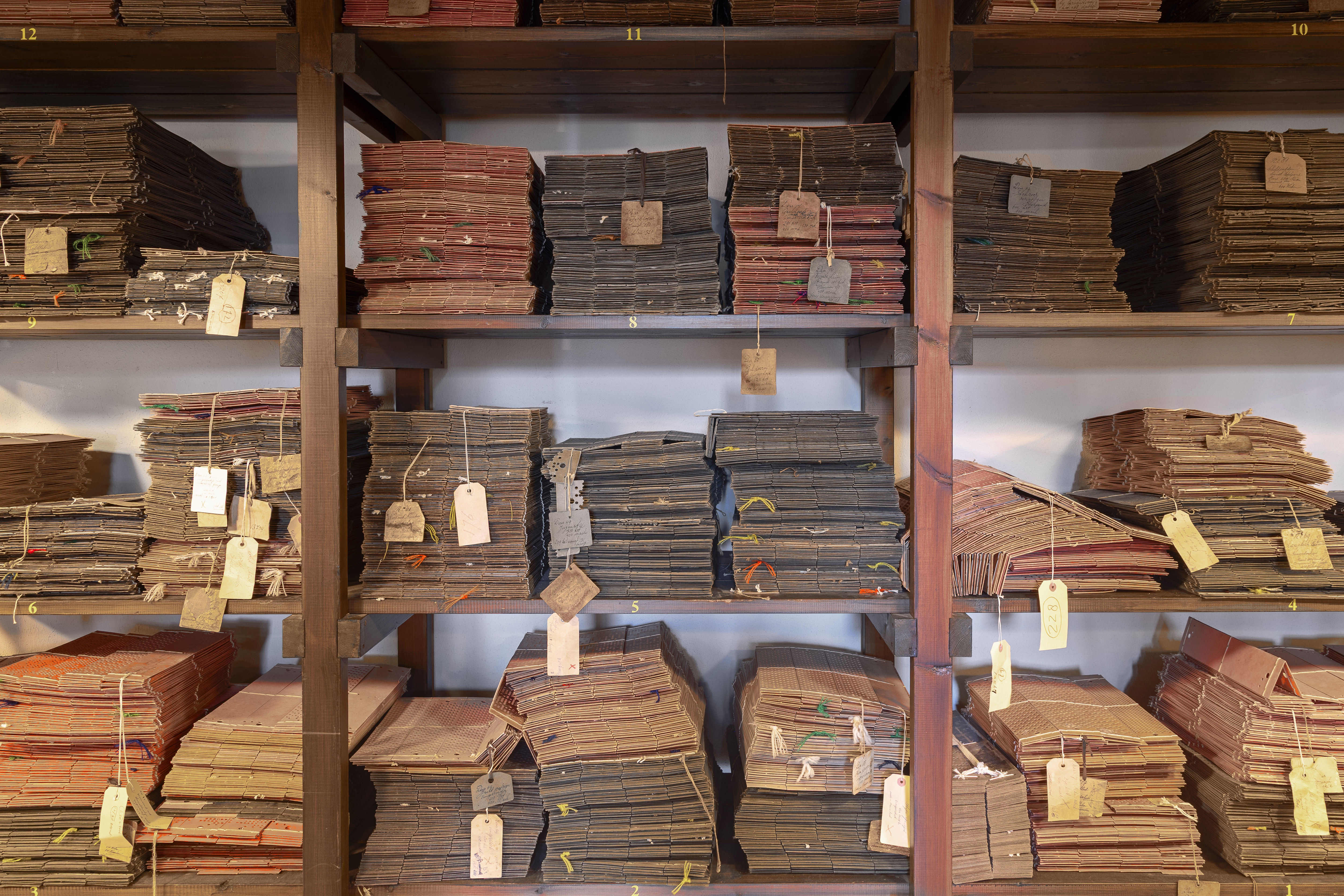
Photo by Josefina Eikenaar for TextielMuseum
A fine piece of work...
The museum library houses a climate-controlled sample room, where bundles of samples and sample books from historical (company) archives are stored close to the public. They can be consulted on request. To non-specialists, sample books may initially appear rather inaccessible: text is often absent, while codes are usually noted on the reverse. For designers and artists, however, these objects are a treasure trove of information and inspiration — and this is precisely the audience that frequently visits us.
Makers repeatedly emphasise that physical contact with the objects offers significant added value compared to digital reproductions. Examining the objects up close allows them to observe details more clearly and to study the reverse side. On a more abstract level, the physical object also enables makers to grasp the ‘soul’ of a design or its creator. In this way, design drawings and sample books from the collection have already led to the creation of new work on numerous occasions.
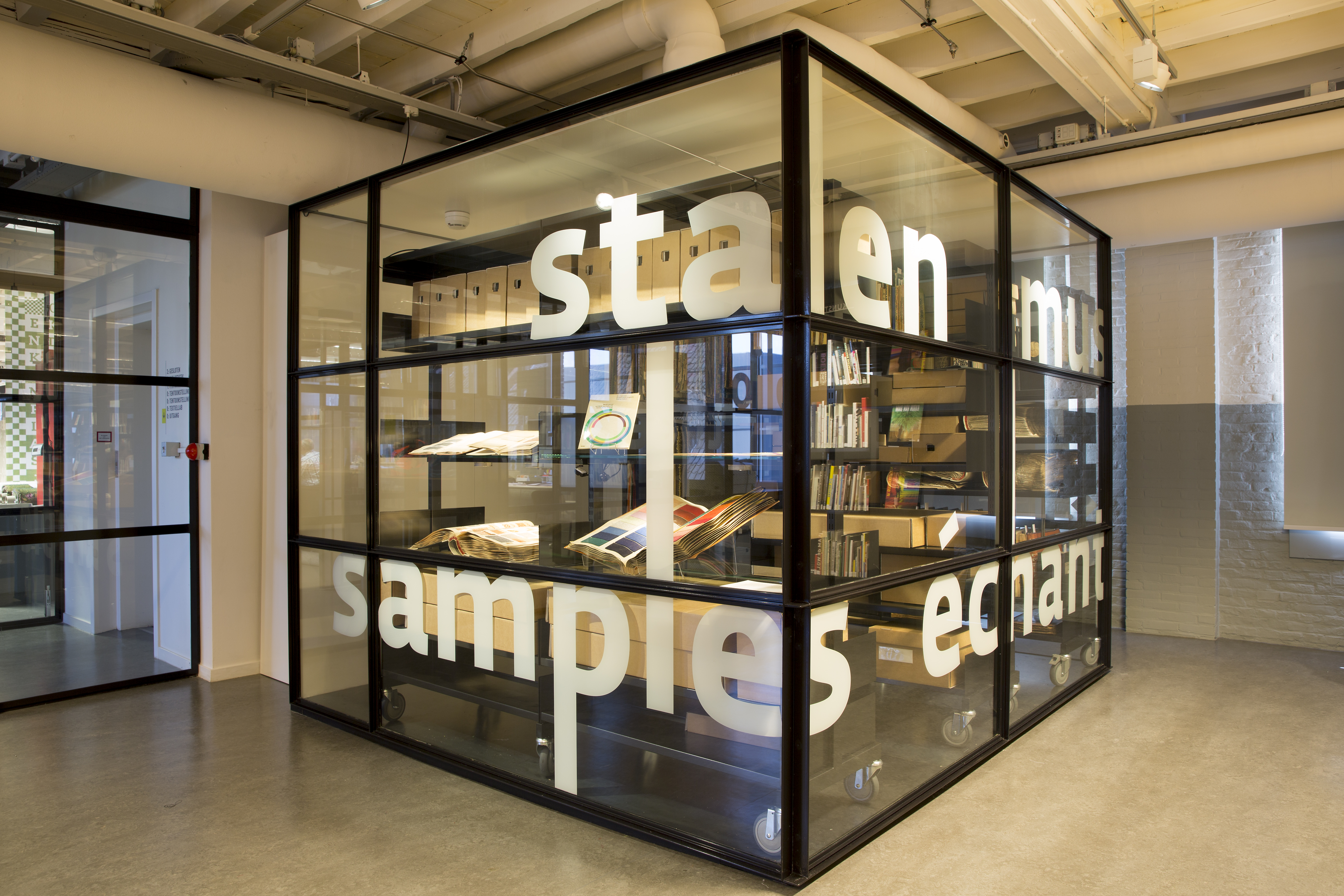
Photo by Tommy de Lange for TextielMuseum
Glass curtain with a modern twist
A first example of this is Raamwerk II by design duo Jas & Cal. Driven by curiosity about how textile is made, Jasmijn Wester and Calvin Kooiman experiment with tools, techniques and materials. In 2020, they began an exploratory study into woven textiles for window coverings. In addition to their own archive of handwoven samples, they drew inspiration from the history of curtains in the Netherlands — particularly the glass curtain — and from relevant samples by Weverij De Ploeg in the museum collection.
The designers experimented with a fabric featuring a metal weft and a cotton warp. This resulted in a contemporary interpretation of the glass curtain: by varying the weave structures, a refined textile emerged with both open and closed areas. The curtain creates a surprising play of light through the metal yarns woven into the fabric.

Raamwerk II. Photo by Josefina Eikenaar for TextielMuseum
Reproductie voor art nouveau wandpanelen
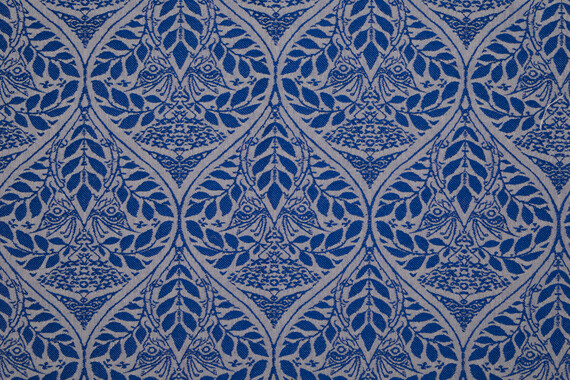
While Raamwerk II was loosely inspired by De Ploeg’s glass curtain samples, the making processes preserved in the collection also enable us to create reproductions. One example is a project by ZZDP Architects for the development of wall hangings for the Koninklijke Industrieele Groote Club from 1916. In 2015, the architects worked on the renovation of this building, which still contained many original Art Nouveau elements.
Several designs by Theo Nieuwenhuis for the Hengelo-based Trijp Weaving Mill, held in the museum collection, proved to be a perfect match. The architects decided to use these designs as the basis for a newly woven fabric for the wall panels, basing both material and colour choices on the original textiles.
Theodoor Nieuwenhuis. Photo by Tommy de Lange for TextielMuseum
Animated designs by Chris Lebeau
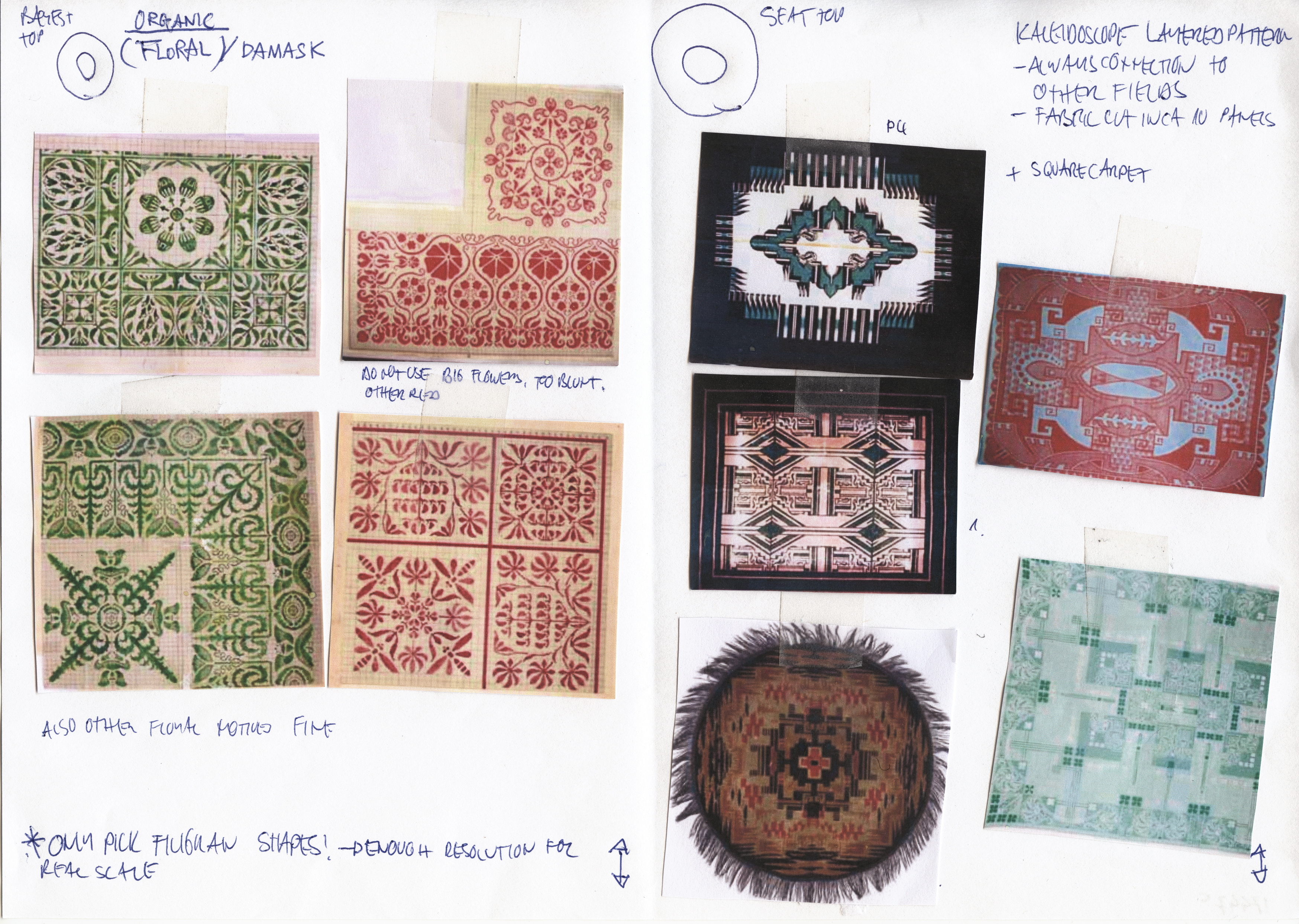
In 2012, as part of the exhibition Turkish Red & More, the TextielMuseum commissioned young designers to develop a number of products inspired by the museum collection, using the TextielLab. Design studio Minale Maeda began their research by exploring patterned textiles in the collection, ranging from figurative to abstract.
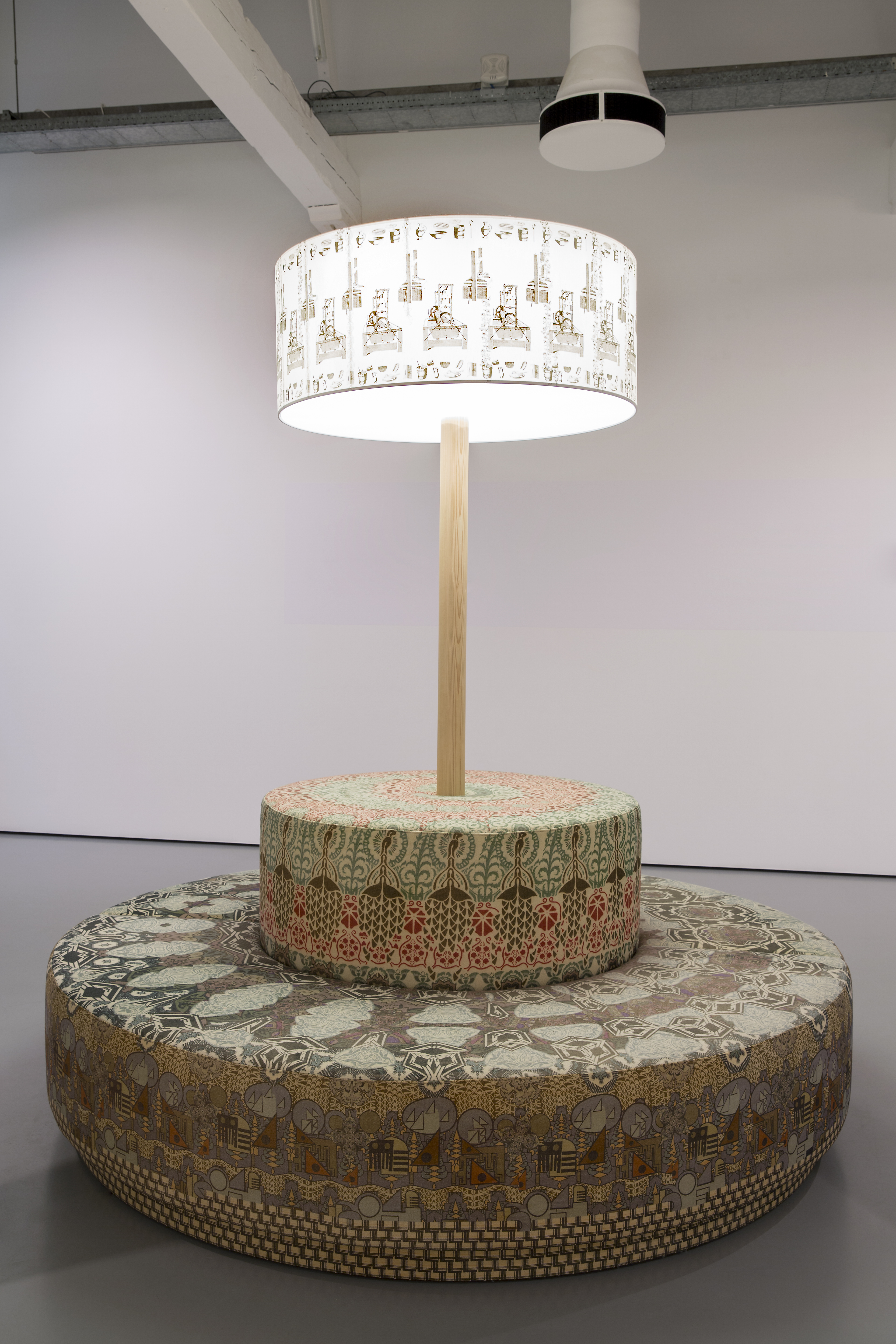
The narrative quality of textile — expressed through texture, colour, pattern or the techniques of weaving and printing — particularly fascinates the designers. In their Zoetrope Bench, they reference an early animation technique: the zoetrope, a device in which slightly different images follow one another in quick succession to create the illusion of movement. Minale Maeda applied this principle to fabric, digitally printed with a series of patterns. These patterns include recognisable elements from textiles by Chris Lebeau and Theo Nieuwenhuis from the collection. The newly developed fabrics were then used to upholster a circular bench. When the bench rotates, the patterns appear to come to life.
Minale Maeda. Photo by Tommy de Lange for TextielMuseum
New donations from the archives
The fact that archives at the TextielMuseum are stored close to the public and can be easily consulted also appeals to potential donors. A recent example is the donation of a series of fabric samples designed by Karel Appel for N.V. Stoomweverij Nijverheid Enschede, donated by the Karel Appel Foundation.
The foundation noted that the textile samples did not quite fit within their own archive, perhaps because textile is a less typical medium within an artist’s archive. The idea that the samples would be kept in our sample room, accessible to the public, was decisive in their decision to donate.
We want more!
The success of the sample room has more than proven itself. Behind the scenes, plans are now underway to expand it: a larger storage space close to the public, where relatively manageable objects can be studied by visitors on request.
To be continued…
Inspiration Minale Maeda. Photo by Joep Vogels for TextielMuseum
Plan your visit
Buy a ticketWritten by Danique Klijs, curator collections at the TextielMuseum.
Would you like to see more of our museum collection or the (upcoming) exhibitions?
Share with friends